
Trace Former Owners of Virginia Land Backward
Begin with the most recent recorded transfer and work step by step toward earlier owners, saving every record reference along the way. Each link earns its keep. The party names and the legal description, not an old address or parcel number, keep the chain moving when details stop matching. The table shows one parcel's sequence.
| Backward Step | Record to Find | Match These Details | Next Move |
|---|---|---|---|
| 1. Start today | Most recent deed into the current tax-roll owner | Grantee, grantor, date, legal description, instrument or book/page | Use the grantor as the next prior owner. |
| 2. Find the prior transfer | Earlier deed into that grantor | Same parcel description, plat reference, and predecessor ID | Repeat the grantee-to-grantor search. |
| 3. Reach the online limit | Local clerk's index, terminal, or deed books | Oldest index and image years for that locality | Move to local books or the matching LVA reel. |
| 4. Resolve a gap | Land tax, plat, will, probate, or chancery file | Name variants, acreage, lot, adjoining land, and year | Return the clue to the deed index or clerk. |
For historical depth, match the source to the era.
| Source | Years It Covers | Where Held | What It Shows |
|---|---|---|---|
| Local deed indexes and books | Local formation date forward; locality coverage differs | Circuit clerk, SRA where enabled, and LVA microfilm | Parties, transfers, legal descriptions, and deed references. |
| Plat and survey books | Local series; dates vary by locality | Circuit clerk, LVA microfilm, and local GIS | Subdivision lots, roads, boundaries, and parent tracts. |
| Virginia land-tax books | 1782 or locality formation through 1978; some later fiche | Library of Virginia and local or state tax holdings | Owner, lots, acreage, value, and tax by year. |
| Chancery causes | Early 18th century into the 20th century by locality | LVA Chancery Records Index and original court files | Partition, estate, title dispute, testimony, maps, and exhibits. |
No statewide deed-book start year or digital cutoff exists. Each county or independent city sets its own limits. Record the online cutoff and the oldest book or reel for that specific locality, since even one office's dates can differ across its holdings.
Virginia Owner History on Microfilm
The Library of Virginia's county and city microfilm guide pinpoints the deed-book and general-index reels for a given locality and year. Searching works by locality, record category, series, and year. Note the reel number once found. Some reels sit in the LVA reading room. Others travel through interlibrary loan, and a few remain reachable only at the local courthouse or archives.
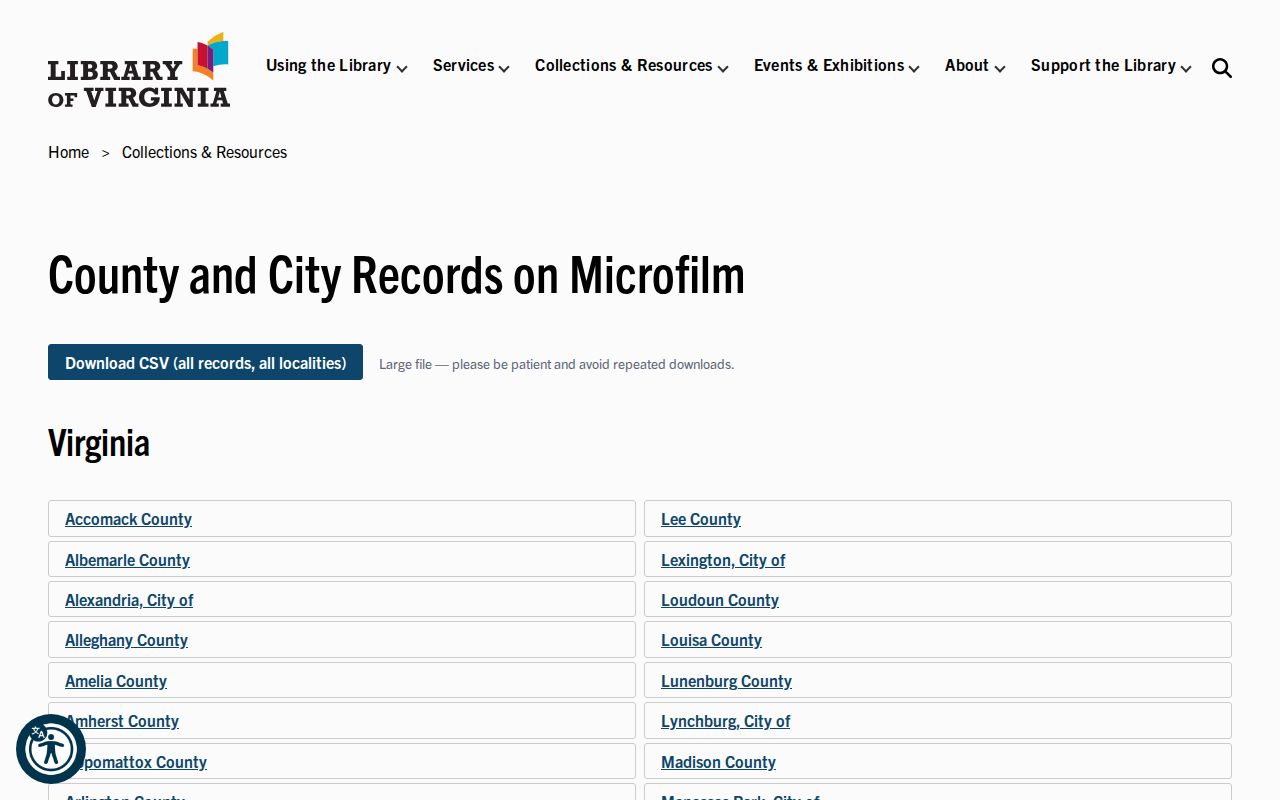
Treat the locality guide as a planning aid, not an owner index. Use that entry to plan the next request. The Virginia circuit clerk directory points to the right local office for questions about its index, courthouse terminal, older volumes, and copy process. Call that office before visiting. Confirm reading-room access, copy rules, and whether the originals still live with the clerk.
LVA equips its reading room with microfilm scanners. Prints may carry a charge. Visitor policy permits free scans to a flash drive. Interlibrary-loan and closed-stack policies can differ. Confirm the route for the exact reel. For an instrument copy, mail the clerk a written request naming the locality, party names, date range, and any known book/page or instrument number, then follow its payment and certification steps.
Follow Virginia's Grantor and Grantee Chain
Virginia land records are indexed by party and document reference. Each clerk's system may label or expose fields differently, though. Select the county or independent city in the SRA/COVERS portal. Search the current owner on the grantee side first. That locates the deed transferring the land into the current owner. Open the instrument if available. Then search that grantor as the next grantee. Repeat the process; the live index can identify a book/page or instrument number even when the image requires a local subscription or courthouse terminal.
- Start with the most recent recorded deed into the tax-roll owner and preserve the full locality and instrument reference.
- Read the legal description and prior-deed citation; an address may not appear in older indexes.
- Search the prior grantor as grantee, then compare the parcel or tract description before adding that owner to the chain.
- At the local online limit, ask the clerk for the next index volume or identify its LVA microfilm series.
- Grantor / grantee
- The party conveying an interest, and the party receiving it.
- Chain of title
- The connected sequence of instruments that shows recorded transfers for the parcel.
- Legal description
- The land description in the instrument, often more durable than a changed street address.
Each SRA/COVERS result links a name to a book:
| Index Detail | What It Can Show | How It Helps Trace Prior Owners |
|---|---|---|
| Party and locality | Grantor, grantee, party role, county or independent city | Confirms which name to carry into the next search. |
| Instrument reference | Deed type, recording date, document number, or book/page | Opens the instrument or directs a clerk copy request. |
| Parcel clue | Tax-map ID when the instrument or local index supplies it | Connects the modern parcel to an older tract, but may be absent. |
| Image and sale detail | Image access; consideration may appear in the image | Read the legal description and prior deed citation before extending the chain. |
Index entries hide behind initials, married names, alternate spellings, trustees, fiduciaries, and business suffixes. Search variants on both sides of the index. Record the exact spelling shown in the instrument. A parcel split can leave an old book describing the parent tract while the modern assessment card uses child parcel numbers.
How Virginia Locality Changes Shift Former-Owner Searches
When a county formed, or an independent city separated from a parent locality, the older records for the same ground usually stayed with the earlier jurisdiction. The modern name may reach only newer records. An older deed or land-tax entry can still sit in the parent county's books. Check the locality's formation history and the LVA microfilm entry before deciding a transfer is missing.
Address labels drift too. Postal city, ZIP, street name, and house number make weak historical identifiers on their own. Search the old owner's name first. Layer in the legal description, adjoining land, road, creek, subdivision, and any prior book/page reference. Tracts split over time. If the current parcel was carved from a larger tract, the parent deed and a later plat can show where the former-owner trail branches.
Virginia Plats Join Old Parcels
A subdivision plat links old tracts to modern lots. Circuit-clerk plat books and LVA microfilm may show lot, block, road, survey calls, acreage, and the book or page a later deed cites. GIS helps locate the modern shape. Its parcel line is a tax-mapping reference, though, not proof of the legal boundary.
Compare a deed's metes-and-bounds calls or lot-and-block description with the cited plat. Keep the names of adjoining owners and physical features. An old deed often names a neighbor, road, creek, or surveyor more clearly than any street address. Parcel IDs change. When the current number differs, ask the assessor or clerk about predecessor or parent parcels. Then follow the recorded split or consolidation instrument.
Rebuild Former-Owner Leads with Virginia Land-Tax Books
More than 19,000 volumes sit in the LVA land-tax collection. Annual lists usually start in 1782 or whenever a locality formed. They then run through 1978, with some later fiche. An entry may list the owner of record and the number of lots. It may also give the annual rent of lots, land quality, and the rate per acre. Total value and the tax owed round out the entry. The LVA land-tax guide helps a researcher pick the locality, year, and reel. Request the record after that.
The guide flags two missing years statewide: 1808 and 1864. Those gaps break an unbroken year-by-year chain. They do not mean a parcel sat empty or lacked an owner. Treat the names and values from the closest surviving years as clues. Then confirm with a deed, will, court order, or plat. Add no one to the ownership chain before that.
Virginia Former Owners in Probate
Probate often explains a puzzling change in a parcel's owner of record. A prior owner may have died. He may have conveyed through a fiduciary, or shared the land with heirs. The circuit clerk's probate files can hold wills and inventories. They can also hold fiduciary bonds, accountings, qualification papers, estate deeds, and orders authorizing a sale. That is how the tax-roll name can shift with no ordinary deed anywhere in sight. The Library of Virginia Chancery Records Index opens another door. Chancery causes can include partition suits, title disputes, testimony, maps, and exhibits. Coverage spans more than 100 localities. Pre-1913 material is a major digitization priority, though the image range varies by locality and date. Search names from both sides of a case. Follow its locality label closely. A later city or county split may have left older files under the parent jurisdiction. Newspapers can add a dated notice worth chasing. Virginia Chronicle serves up searchable historical pages. OCR misses names, so try spelling variants too. Always confirm any notice against the clerk's instrument or case file. A news item never replaces the deed or the court's disposition.
How Far Virginia Owner Records Reach
No single year marks the start of Virginia deed records. Each locality's deed books begin with its own formation. Each has its own survival story. LVA's locality guide points to the oldest known microfilm series for each place. A clerk can confirm whether originals, indexes, or later copies still exist. Land tax works on a different calendar: annual lists generally begin in 1782 or at locality formation. They run through 1978, with some later fiche. Remember the statewide gaps for 1808 and 1864. A blank year is never proof that the land or its owner vanished. Courthouse fires are a real obstacle, but not a generic one. LVA's Lost Records Localities project documents each locality's specific losses. It points toward neighboring jurisdictions or reconstructed tax, deed, order, and chancery materials. Check the entry for the exact locality rather than repeating a generalized disaster story. For earlier Virginia transfers, family papers, church registers, patents, and manuscripts can help. So can colonial-era court records. Every clue still has to be tied back to the land and its recorded chain.
Keep the history tied to the property. Former-owner research is useful for house history, estate work, boundary diligence, and a title question. A name in an old book can point to a record, but it does not by itself establish residence, family ties, or present ownership.